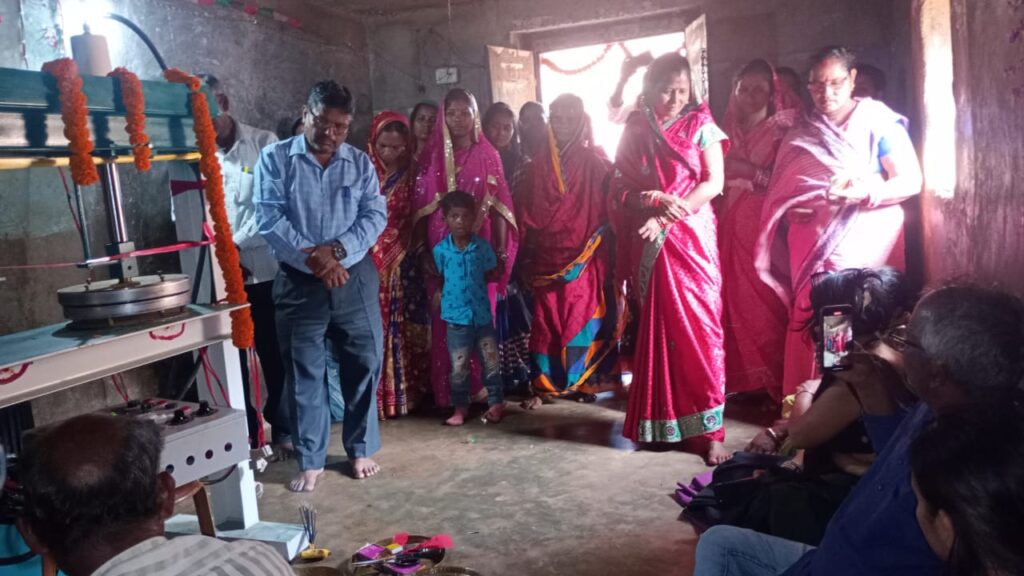
On January 8, 2025, Bhagyalaxmi Biswal of Vasundhara (an NGO working on Indigenous land rights) and I arrived in Gunduribadi, a village of about 98 families of Kondhs and Dalits in Nayagarh district, Odisha. We were greeted by Chheta Pradhan, the forty-something President of the local Thengapalli group, with a warm smile. As we walked through the village, lined with houses made of mud and thatch, we saw Chheta’s mother-in-law, Subarna – an elderly veteran of the forest protection movement—standing at her doorstep, smiling. Women were drying freshly harvested paddy on the village path, preparing parboiled rice for year-long consumption.
A group of animated women in colorful saris welcomed me at a makeshift one-room community hall. They were eager to discuss how they safeguard the forest surrounding Ma Mani Nag (Jewel of the Cobra) Hill Range from loggers, developers, and even forest officials. To them, the hills and jungle are their ‘Ma’—mother and father—essential to their sustenance, livelihood, and identity. These women are true climate heroes dedicated to preserving their environment.
The Thengapalli Tradition: Guardians of the Forest
In 212 villages across Odisha, women observe ‘Thengapalli’ to protect their forests. ‘Thengapalli’ comes from ‘thenga’ (stick) and ‘palli’ (turn). Women patrol the forest in shifts, leaving a stick at a neighbor’s door as a sign to take their turn. When asked how they ensure participation, they simply said, “We go by trust.”
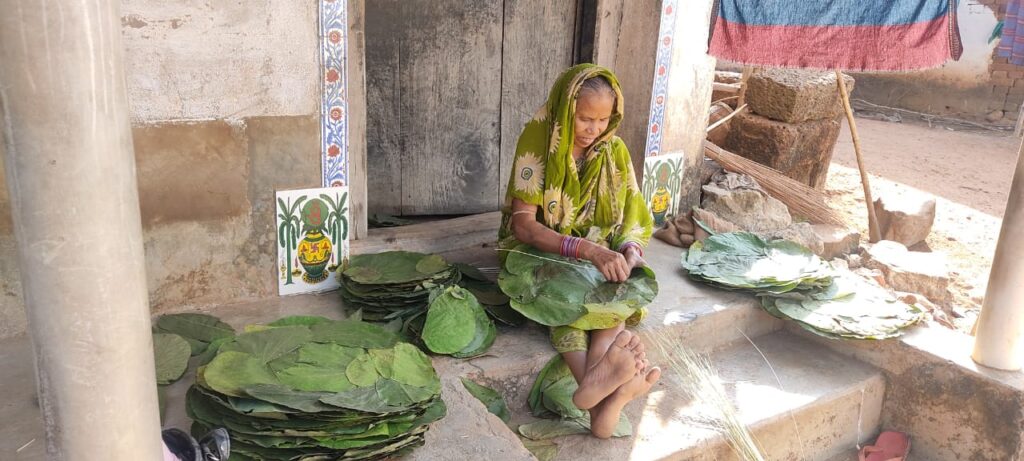
Ma Mani Nag Hill has valuable trees like sal, Piasal (Indian Kino), and sagwan (teak wood) in abundance. Women collect fallen sal and Siali leaves to make leaf plates for feasts and festivals. They enter the forest every morning to gather leaves, wild potatoes, greens, and seasonal fruits like mangoes and jackfruits. They never cut trees, collect dry wood for fuel, and actively plant new ones.
From Male Leadership to Women’s Revolution
Community forest protection in this region began in the 1970s and was led by men. By the 1990s, however, mismanagement had left the hills barren, and the forests were dwindling. Loggers and corrupt officials were exploiting resources, leaving villagers struggling. Seeing this, Kondh women joined forces with Dalit and general caste neighbors to reclaim control. They established the Ma Mani Nag Jungle Surakshya Parishad (Forest Protection Council), now led by a woman, Pratima Jena, from a neighboring village. Together, they secured Community Forest Rights (CFR) under the 2006 Forest Rights Act, ensuring their legal claim to the land.
Stories of Courage: Standing Up to Exploitation
These women see the forest as sacred. In December, they discovered a massive teakwood tree illegally cut into logs. They quickly alerted the village and guarded the logs. When forest rangers arrived to confiscate the wood, the women demanded who had authorized the felling. Chheta remarked, “There is no thief without the forest official. They collaborate to destroy the forest.”
One young ranger, herself an Adivasi, mocked them, asking an elderly woman, Ujjal, “Why are you so possessive about this wood? Have you nurtured this teak with your urine?” Offended, Ujjal retorted, “The wood belongs to our forest; it is ours.” Faced with their unwavering resolve, the officials relented. The logs remained in the village, and the loggers were forced to apologize publicly.
During COVID-19, Gunduribadi remained untouched by the pandemic. The villagers survived solely on their forest produce, ensuring no outsiders entered. Their self-sufficiency proved the resilience of their lifestyle.
Divine Protection: The Role of Spirituality
I asked the women who inspired their fearless activism. They took me to their androgynous goddess, Kalia Sandha (Black Bull), their mentor and protector. They also worship Bagha Devi (Tiger Goddess), Jhara Dei (Spring Goddess), and Ghoda Dei (Horse Goddess), believing these deities safeguard them and their jungle from injustice.
Fighting Against Modern Exploitation
Developers and forest officials frequently attempt to encroach on their land. A developer once proposed a stone crusher near the village primary school, promising gifts and feasts. Recognizing the dangers—dust harming their trees, noise affecting their health, and disruptions to their children’s education—the women fought back. With help from Bhagyalaxmi Biswal, they petitioned state authorities, and despite prior government approval, the developer was forced to withdraw. This victory reinforced their determination to keep their village free from industrial pollution.
The forest department also pressures them to adopt the Vana Sarakhyana Samiti (VSS) model, a joint forest management scheme where profits are split between the government and villagers. But the women know that government intervention would orphan them and their jungle. “In the name of development, our forest will disappear,” they say.
Lessons from the Thengapalli Women
I learned three invaluable lessons from these women:
- Forest protection is intergenerational. Women pass leadership to their daughters-in-law, ensuring the next generation carries on the tradition.
- Unity transcends caste barriers. Dalits, Kondhs, and general caste villagers work together, proving that nature unites where society divides.
- They recognize the divine spirit in the forest, believing it ensures their well-being.
A Small Gift, A Big Change
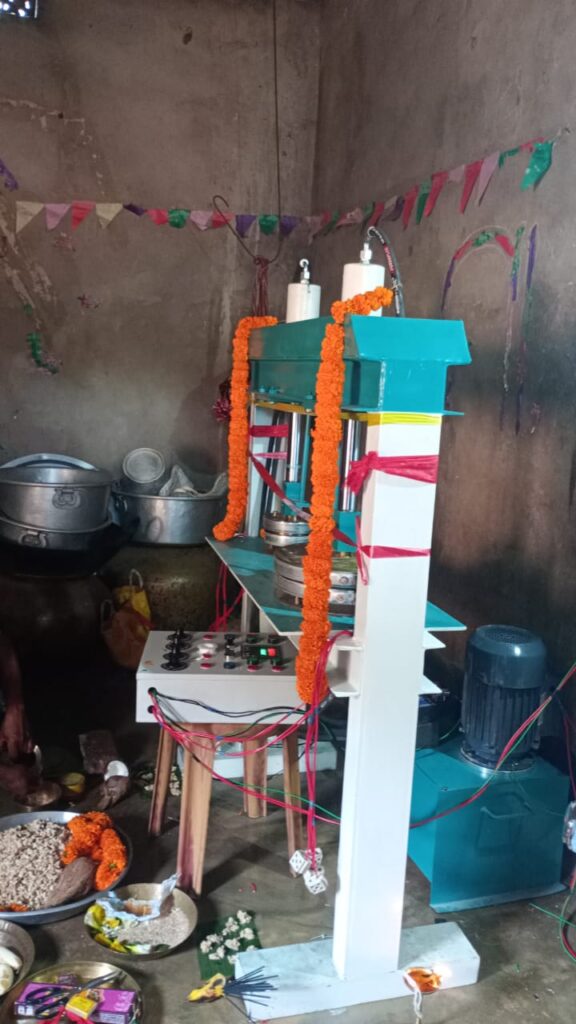
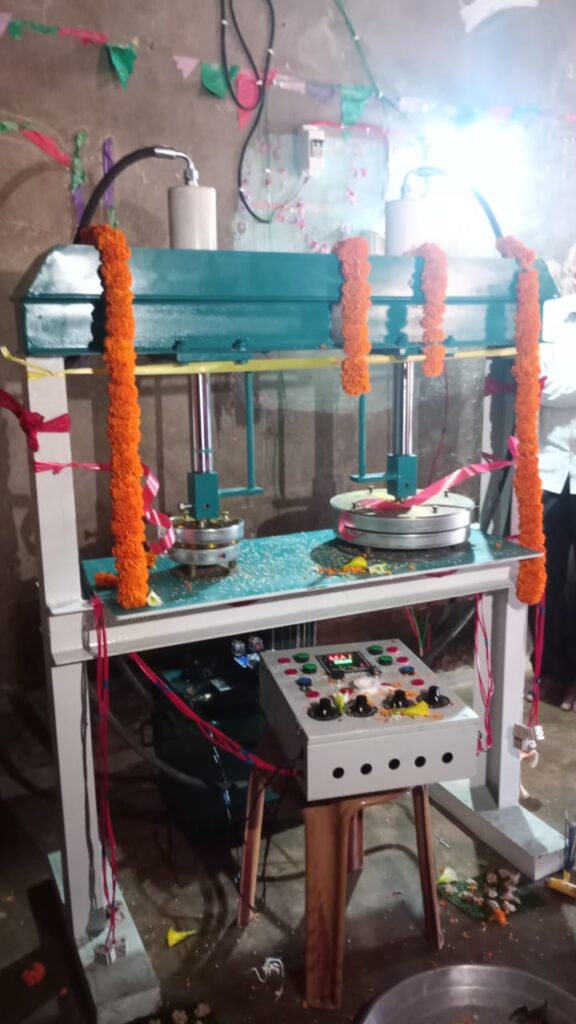
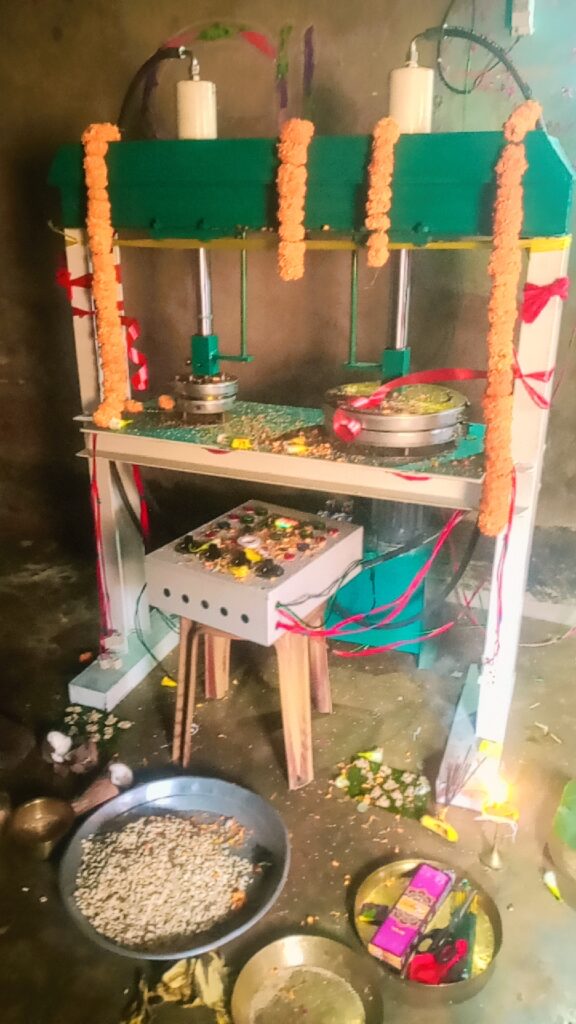
Despite their resilience, these women struggle financially. Before I left, they requested a Khali (leaf plate) machine. Hand-making plates fetch only $1 per 100 plates, but a machine could triple their earnings to $3 per 100 plates.
Prof. Debendra Das, Professor Emeritus at the University of Alaska, was visiting Odisha. After hearing their story, he generously offered $600—half the cost of a $1,200 dual-purpose machine for making leaf plates and bowls. Through the South Asia Study Initiative (https://thesasi.org), a small non-profit in the USA, we secured the machine before I left. The impact was immediate. Chheta excitedly shared, “Madam, I can now make 200 plates in an hour! My children have become experts, too.”
The Thengapalli women have taught me the joy of sharing and the deep connection between forests, identity, and survival. Their fight continues. Machines for cashew processing, Khali making, and teacup production could transform women’s lives in 212 villages. If anyone wishes to support them, please reach out to the author.
These women are not just protectors of trees; they are guardians of a way of life. Let us listen to their voices.